
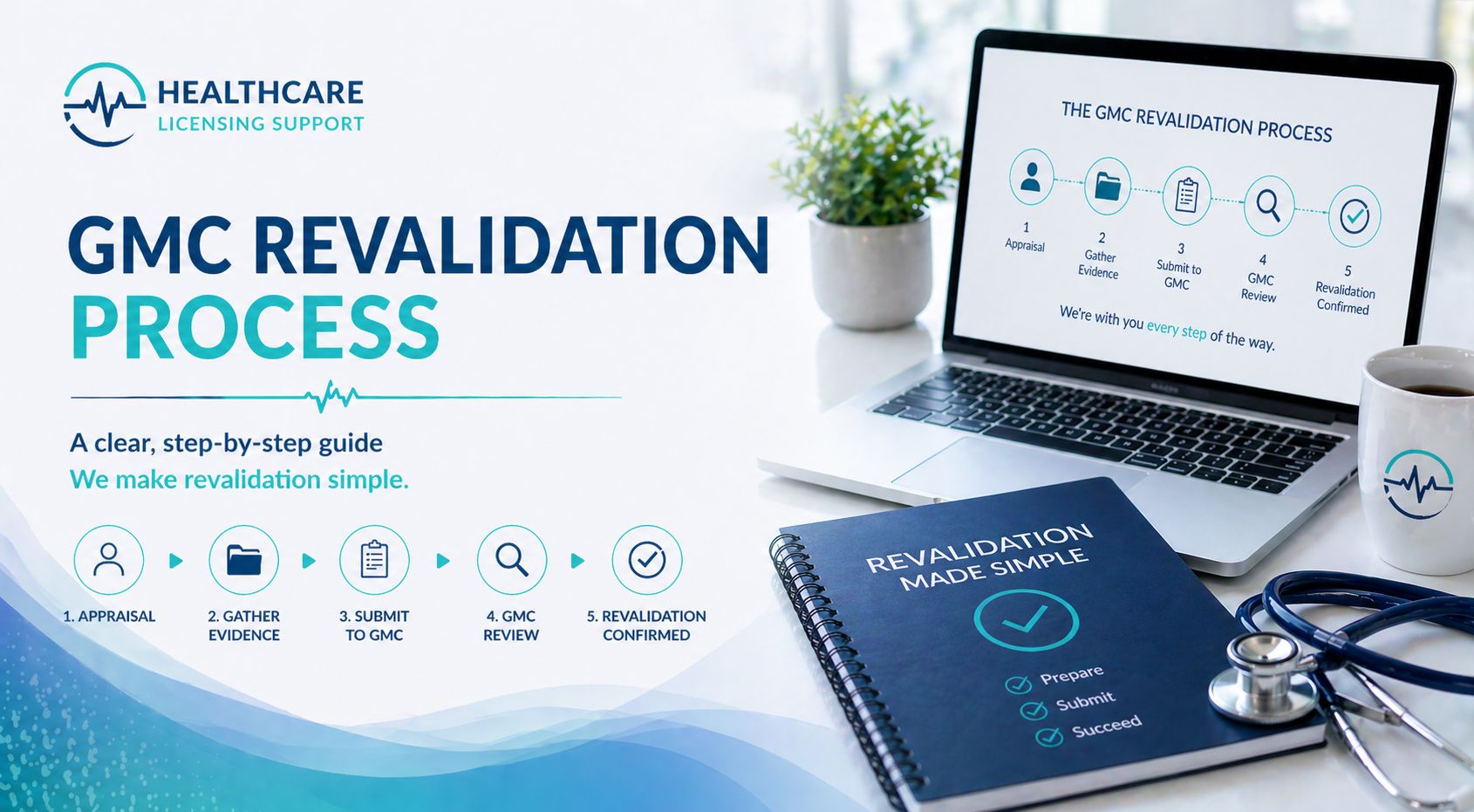
GMC Revalidation: A Comprehensive Guide
Revalidation is a critical process that ensures doctors remain up to date and fit to practise throughout their careers. Overseen by the General Medical Council (GMC), it provides assurance to patients, employers, and the public that medical professionals continue to meet required standards.
What Is Revalidation?
Revalidation is the process by which licensed doctors demonstrate on a regular basis that they are maintaining the knowledge, skills, and behaviours required for safe and effective practice. Typically occurring every five years, it is based on ongoing appraisal and evidence collected over time rather than a single examination or assessment.
The process is designed to promote reflective practice, continuous professional development, and accountability within the medical profession.
Providing The GMC With Information For Revalidation
Doctors do not usually submit information directly to the GMC. Instead, relevant information is gathered and assessed locally through appraisal systems and governance structures. This includes evidence of clinical work, feedback, and professional development activities.
The GMC relies on recommendations made by a doctor’s Responsible Officer (RO), who evaluates whether sufficient evidence has been provided to support revalidation.
Connection To A Suitable Person
To participate in revalidation, every doctor must have a prescribed connection to a designated body—typically their employer or a contracting organisation such as an NHS trust.
This connection ensures that:
- There is a structured appraisal process in place
- A Responsible Officer is assigned
- Appropriate oversight and governance mechanisms exist
Doctors without a clear organisational attachment (e.g., locums or those in independent practice) must establish a connection with a suitable body to remain eligible for revalidation.
Requests For Other Information
In some cases, the GMC may request additional information to support a revalidation decision. This could occur if:
- There are gaps in submitted evidence
- Concerns have been raised about a doctor’s practice
- Clarification is needed regarding appraisal outcomes
Such requests are typically routed through the Responsible Officer and must be addressed promptly to avoid delays in the revalidation process.
Engaging In The Processes That Support Revalidation
Revalidation is not a passive process. Doctors are expected to actively engage in several supporting activities, including:
- Annual appraisals
- Continuing Professional Development (CPD)
- Quality improvement activities
- Significant event analysis
- Feedback from patients and colleagues
Consistent engagement demonstrates professionalism and commitment to maintaining high standards of care.
Sharing Information With Your Responsible Officer
The Responsible Officer plays a central role in revalidation. Doctors must ensure that all relevant information is shared with their RO in a timely and transparent manner.
This includes:
- Appraisal documentation
- Records of CPD
- Any complaints or incidents
- Outcomes of investigations or audits
Failure to disclose relevant information can impact the revalidation recommendation and may raise concerns about professional integrity.
Revalidation Supporting Information
Supporting information forms the evidentiary basis for revalidation. Over the five-year cycle, doctors are expected to collect and reflect on:
- CPD activities
- Quality improvement work (e.g., audits)
- Significant events
- Feedback from patients
- Feedback from colleagues
The emphasis is not just on participation, but on reflection—demonstrating how learning has influenced practice.
Annual Whole Practice Appraisal
At the core of revalidation is the annual whole practice appraisal. This is a structured discussion between the doctor and a trained appraiser, covering the entirety of the doctor’s professional work.
Key features include:
- Review of all scopes of practice (clinical and non-clinical)
- Reflection on supporting information
- Identification of development needs
- Agreement on a Personal Development Plan (PDP)
The appraisal acts as the primary mechanism for assessing readiness for revalidation.
When You Will Revalidate
Doctors are typically required to revalidate every five years. The exact timing depends on:
- The date of first registration or last revalidation
- Recommendations made by the Responsible Officer
- Any deferrals due to insufficient evidence or ongoing investigations
The GMC notifies doctors in advance of their revalidation date, allowing sufficient time to ensure all requirements are met.
Final Thoughts
GMC revalidation is fundamentally about maintaining trust in the medical profession. Rather than being a bureaucratic exercise, it is intended to reinforce a culture of continuous improvement, reflection, and patient safety.
Doctors who engage proactively with appraisal processes and maintain robust documentation will find revalidation a manageable and valuable part of their professional lifecycle.